
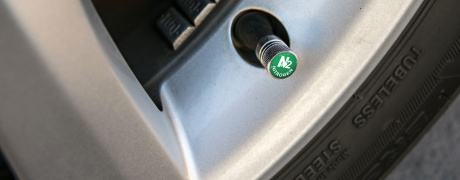
Maintaining a proper tire inflation pressure is among the most basic methods of increasing the vehicle’s fuel economy. When you have the correct tire pressure and balanced load capacity, it can be helpful in enhancing the longevity of the tire tread. Although having a good quality tire is vital, but it is its internal pressure that has to do all the lifting.
If you don't like to check your vehicle's tire pressure, then nitrogen tire inflation can be your best choice, as it is a stable gas capable of maintaining air pressure at any temperature. As the expansion and contraction of the gases in your tires depend on the ambient temperature, so nitrogen tire inflation can indeed be helpful.
What is Nitrogen Tire Inflation?
The rubber used to make tires consists of a molecular structure, and its expansion and contraction depend on the internal pressure and ambient temperature, as the air can escape through the permeable membrane.
Nitrogen comes with a more robust molecular structure and is able to maintain constant pressure by keeping the molecules inside the tire.
As nitrogen is a dry and inert gas, unlike the refillable air found in most gas stations, it can minimize oxidation, reduce wear, and limit humidity and heat-trapping moisture. Therefore, it can be a great way to prolong the life of the tires.
The Process of Nitrogen Inflation
With the help of the nitrogen inflation process, you can have the highest nitrogen percentage in each tire. 96 percent is known to be optimal, but the main idea is to reduce the amount of oxygen and other common gases.
The process starts by opening the valve port of the tire, and all the air is removed. In the next step, a nozzle is attached to the source of nitrogen, and then the tire is inflated to the recommended pressure.
Once the required PSI is reached, the valve port is again opened to allow almost all of the nitrogen to go out. This valve is then closed just before all of the nitrogen gets evacuated. In the end, the tire is filled to the recommended PSI of the tire manufacturer.
What Are the Benefits of Nitrogen Tire Inflation?
The primary benefit is the reduced speed of air pressure loss.
With nitrogen, you can prevent moisture from accelerating any deterioration of the equipment and the rubber compounds.
It can also be helpful in slowing down the oxidation of steel belts.
When the tires are inflated with nitrogen, they prevent rusting of the wheel rims.
Final Verdict
Whether you go for nitrogen tire inflation or regular air, it is essential that you keep the tires inflated in a proper manner because it helps to reduce the rolling resistance and improves the fuel efficiency of the vehicle.
As a driver, inflating the tires with nitrogen may not hurt you and can indeed provide you with a number of benefits, but availability and cost is the main barrier for the vehicle owners for making the transition to nitrogen.

Reviewed by Alex Ross
Content Editor, responsible for maintaining the quality and accuracy of the information presented on our blog.
Same articles
Van Nuys or LAX: Choosing the Right Airport for a Private Flight to Los Angeles
GuidesLos Angeles is not served by one universally convenient airport. The metropolitan area covers a wide geographic region, and road traffic can make ground transportation as important as flight...
5 Ways to Save on Car Insurance This Year
GuidesCar insurance is one of those expenses that can quietly increase from one renewal to the next. Even if you have not changed vehicles, moved, or filed a claim, the price you pay today...
Why Mobile Auto Repair Is Becoming the Smarter Way to Maintain Your Car
GuidesCar maintenance has traditionally meant rearranging your schedule around a repair shop, but mobile automotive service is changing that model. Instead of bringing the vehicle to the technician...