
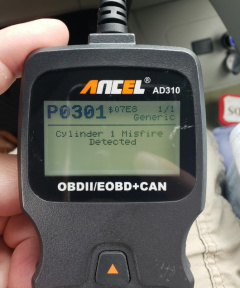
Misfires can affect any gasoline engine and are typically characterized by temporary jerking of the engine and noticeable loss of power. This is often due to a missing spark, preventing the fuel-air mixture in at least one cylinder from igniting.
When the spark is absent, the fuel doesn't burn in the combustion chamber but in the hot exhaust system, damaging the catalytic converter. Engines with worn piston rings will also face oil dilution, as the unburned fuel mixes with the engine oil.
Symptoms of Misfires
- Occasional jerking at idle and while driving, which intensifies and coincides with the engine control light turning on.
- Particularly in the higher RPM range, there's a loss of power.
- Jerking at idle and while driving
- Noticeable loss of power
- RPM fluctuations
- Engine stalling at idle
- Illuminated engine control light
- Diagnostic trouble codes, e.g., P0302 (Misfire Cylinder 2), P0304 (Misfire Cylinder 4)
- Noticeably louder engine
Causes of Misfires

- Defective Spark Plugs: Spark plugs should be replaced according to the manufacturer's recommendations, typically every 18,641 - 24,855 miles (29,770 - 40,000 km), and for Iridium every 62,137 miles (100,000 km).
- Defective Ignition Coils: Ignition coils of original equipment quality last about 93,205 to 124,274 miles (150,000 - 200,000 km), but the cheapest ones may require replacement after just 12,427 miles (20,000 km).
- Damaged Ignition Wires: Insulation can be damaged (e.g., by engine heat), leading to misfires on damp days.
- Incorrect Installation of Spark Plugs: Insufficient tightening or damage to the insulator during installation
- Leaky Intake System
- Incorrect Fuel-Air Mixture
- Low Compression
Conclusion
Dealing with engine misfires is essential for maintaining your car's performance. These misfires usually show up as jerking or power loss, especially at higher RPMs, often signaled by the engine control light. The culprits? Often it's worn spark plugs, which should be replaced according to manufacturer's intervals. Also, keep an eye on ignition coils and wires, as low-quality ones may fail prematurely. Installation mistakes, a leaky intake system, incorrect fuel-air mix, and low compression can also cause misfires. Regular maintenance and using quality parts are key to avoiding these issues and ensuring your engine runs smoothly.

Reviewed by Alex Ross
Content Editor, responsible for maintaining the quality and accuracy of the information presented on our blog.
Same articles
Mobile Auto Repair and Maintenance Services: Convenient Car Care Wherever You Are
GuidesWhen a vehicle breaks down or starts showing signs of trouble, getting it to a traditional repair shop is not always easy. Mobile auto repair services solve this problem by bringing professional...
The Hidden Math Behind Zoom Whitening Profit in Houston Practices
GuidesOn paper, teeth whitening should be one of the most profitable services a Houston dental practice offers. The chair time is short, demand is steady across the metro's...
Why Professional Appliance Repair Is Essential for a Comfortable Home
GuidesModern homes depend on appliances every single day. A washing machine keeps laundry under control, a refrigerator protects food, a dryer saves time, and an oven makes daily cooking easier. When...